
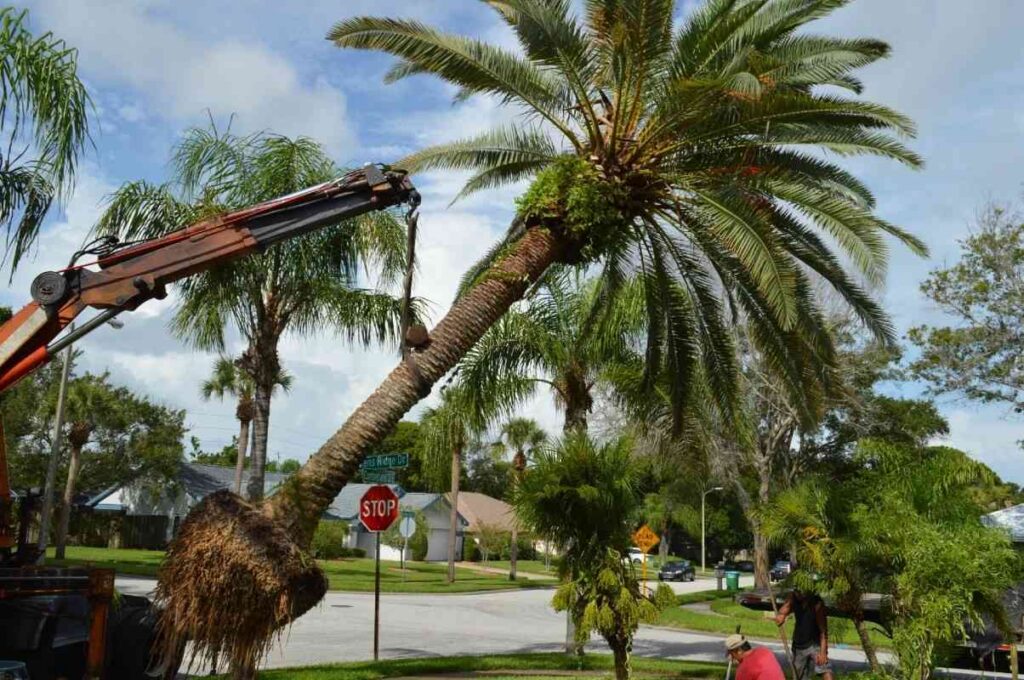
This guide explains when removal makes sense, what makes palms hazardous, and how professional crews typically manage large palms in tight suburban spaces.
When should a palm tree be removed rather than trimmed?
Palm tree removal is recommended when ongoing pruning no longer controls the risk or the cost keeps returning. If palms are repeatedly shedding heavy fronds, producing unstable seed pods, or causing damage to roofs, gutters, fences, or paving, removal can be the cleaner long‑term fix.
Palm tree removal is also common when the palm has outgrown its location, blocks solar access, interferes with powerlines, or fails a safety assessment after storms.
What makes large palms hazardous on Sydney properties?
Large palms concentrate weight high above the ground, and the crown can act like a sail in strong winds. Dead fronds can detach without warning, and seed clusters can fall as heavy projectiles, especially after rain.
Their root systems can also lift pavers, crack edging, and destabilise nearby retaining walls over time. In narrow side access areas, the risk increases because fronds and trunk sections have limited drop zones.
How can they tell if a palm is structurally unsafe?
Signs of instability often show up in the crown, trunk, and surrounding soil. If they notice a sudden lean, cracking sounds in wind, soft or hollow areas on the trunk, or soil heaving on one side, it may indicate movement at the root plate.
A thinning canopy, dead spear (the newest central frond), or persistent decay around the crown can also point to decline. Because palms fail differently from broadleaf trees, a qualified arborist assessment is usually the safest way to confirm risk.
What is the typical process for palm tree removal in Sydney?
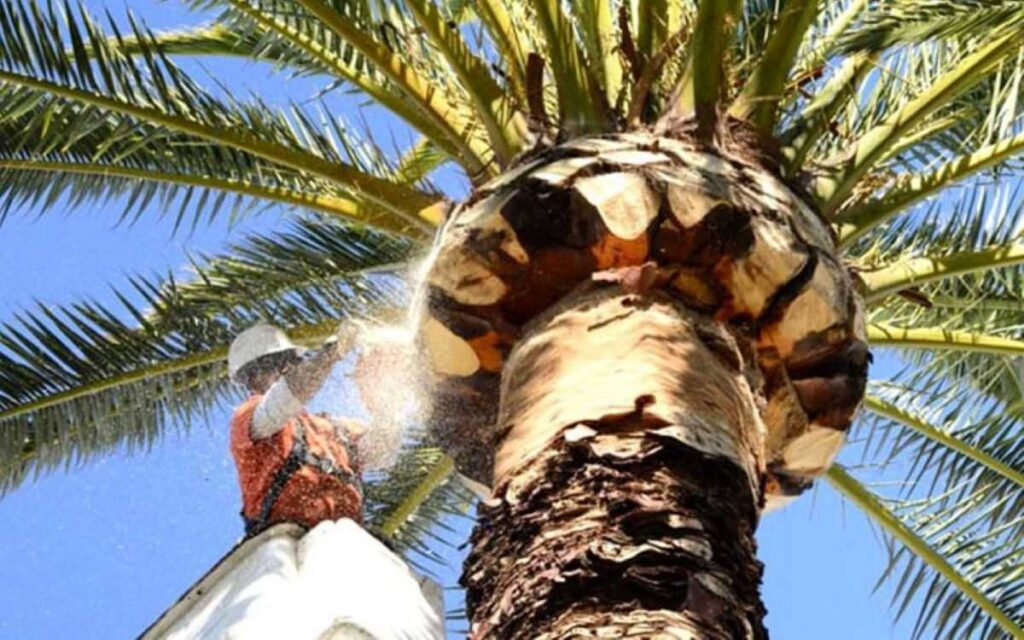
Most professional removals start with a site inspection and a plan for access, drop zones, and rigging points. Crews commonly remove the fronds first to reduce wind load and control debris, then dismantle the trunk in sections.
In tight areas, they often use ropes, lowering devices, and controlled cuts so sections can be lowered rather than dropped. If the palm is near a house, pool, or boundary fence, piece-by-piece dismantling is usually the default approach.
Why is crane-assisted removal sometimes used?
Crane removal is typically chosen when the palm is very tall, the backyard is confined, or there is no safe way to lower trunk sections through the canopy. A crane can lift heavy pieces directly over roofs and onto a truck, reducing cutting time and lowering risk.
They may also use cranes when a palm is storm-damaged and unstable, since climbing or rigging on a compromised trunk can be dangerous. Check out more about mobile cranes and tree removal.
Do they need council approval to remove a palm in Sydney?
Approval depends on the local council, the property zoning, and whether the palm is protected under a Tree Preservation Order or similar controls. Some councils focus on trunk diameter at a set height, species, or whether the tree contributes to streetscape or heritage areas.
They should check council rules before booking removal, especially if the palm is large or near the front boundary. A professional arborist can often help by confirming whether an application is required and preparing supporting documentation if needed.
How do professionals manage risk around powerlines, fences, and neighbouring property?
Crews usually set exclusion zones, use spotters, and choose rigging methods that prevent swing into structures. If the palm is close to service lines, they may coordinate with the relevant utility or use specialised clearance techniques.
For boundary jobs, they typically plan cut directions and lowering angles to keep all debris within the work site. They may also notify neighbours in advance when access, noise, or temporary parking is likely. You may like to visit https://tepsvillaroma.com/tree-removal-cost-sydney-factors-influencing-pricing/ to learn more about Tree Removal Cost Sydney: Factors That Influence Pricing.
What happens to the stump and roots after removal?
Palm stumps can be left low and capped in some cases, but many owners choose stump grinding to reclaim space and prevent regrowth issues around landscaping. Grinding reduces the stump below ground level so soil and turf can be reinstated.
Palm roots are fibrous and can remain in the soil for some time, but they usually break down without the aggressive lateral spread seen in some tree species. If they are replanting, removal of the stump and upper root mass generally makes the site easier to rebuild.
How should they choose a palm removal service in Sydney?
They should look for a qualified arborist-led team with appropriate insurance, safe work procedures, and experience dismantling palms in confined suburban blocks. A good provider typically explains their method, confirms access and disposal logistics, and provides a clear written quote.
It also helps if they can offer supporting advice on council rules, replacements, and aftercare for the surrounding landscape.
What should they do after the palm is removed?
They should check for damaged gutters, cracked paving, or irrigation lines exposed during the job, then restore soil levels if stump grinding was completed. If the palm was shading lawns or garden beds, sun exposure can change quickly, so watering schedules and plant choices may need adjustment.
For replacements, many owners choose smaller feature trees or clumping palms that stay manageable, keeping long-term pruning and risk under control.
FAQs (Frequently Asked Questions)
When should a palm tree in Sydney be removed instead of trimmed?
A palm tree should be removed when ongoing pruning no longer controls the risk or the cost keeps returning. Removal is advisable if the palm is repeatedly shedding heavy fronds, producing unstable seed pods, causing damage to roofs, gutters, fences, or paving, has outgrown its location, blocks solar access, interferes with powerlines, or fails a safety assessment after storms.
What factors make large palms hazardous on Sydney properties?
Large palms can be hazardous because they concentrate weight high above the ground and their crown acts like a sail in strong winds. Dead fronds and heavy seed clusters can fall unexpectedly. Their root systems may lift pavers, crack edging, and destabilise retaining walls over time. Risk increases in narrow side access areas due to limited drop zones for fronds and trunk sections.
How do professionals determine if a palm tree is structurally unsafe?
Signs of instability include sudden leaning, cracking sounds in wind, soft or hollow trunk areas, soil heaving on one side indicating root plate movement, thinning canopy, dead spear (newest central frond), and persistent decay around the crown. Since palms fail differently from broadleaf trees, a qualified arborist assessment is the safest way to confirm structural risk.
What is the typical process for professional palm tree removal in Sydney suburban spaces?
Professional removal starts with a site inspection and planning for access, drop zones, and rigging points. Crews remove fronds first to reduce wind load and control debris, then dismantle the trunk in sections. In tight spaces near houses or fences, they use ropes and controlled cuts to lower sections piece-by-piece rather than dropping them.
Is council approval required to remove a palm tree in Sydney?
Council approval depends on local regulations, property zoning, and whether the palm is protected under Tree Preservation Orders or similar controls. Factors include trunk diameter at set heights, species type, and contribution to streetscape or heritage areas. It’s important to check council rules before removal; professional arborists can assist with applications and documentation.
How do professionals manage risks when removing palms near powerlines or neighbouring properties?
Crews establish exclusion zones and use spotters along with rigging methods that prevent debris swinging into structures. When palms are close to service lines, they coordinate with utility companies or use specialized clearance techniques. For boundary removals, they plan cut directions and lowering angles carefully to keep debris within the work site and notify neighbours about access or noise disruptions.