
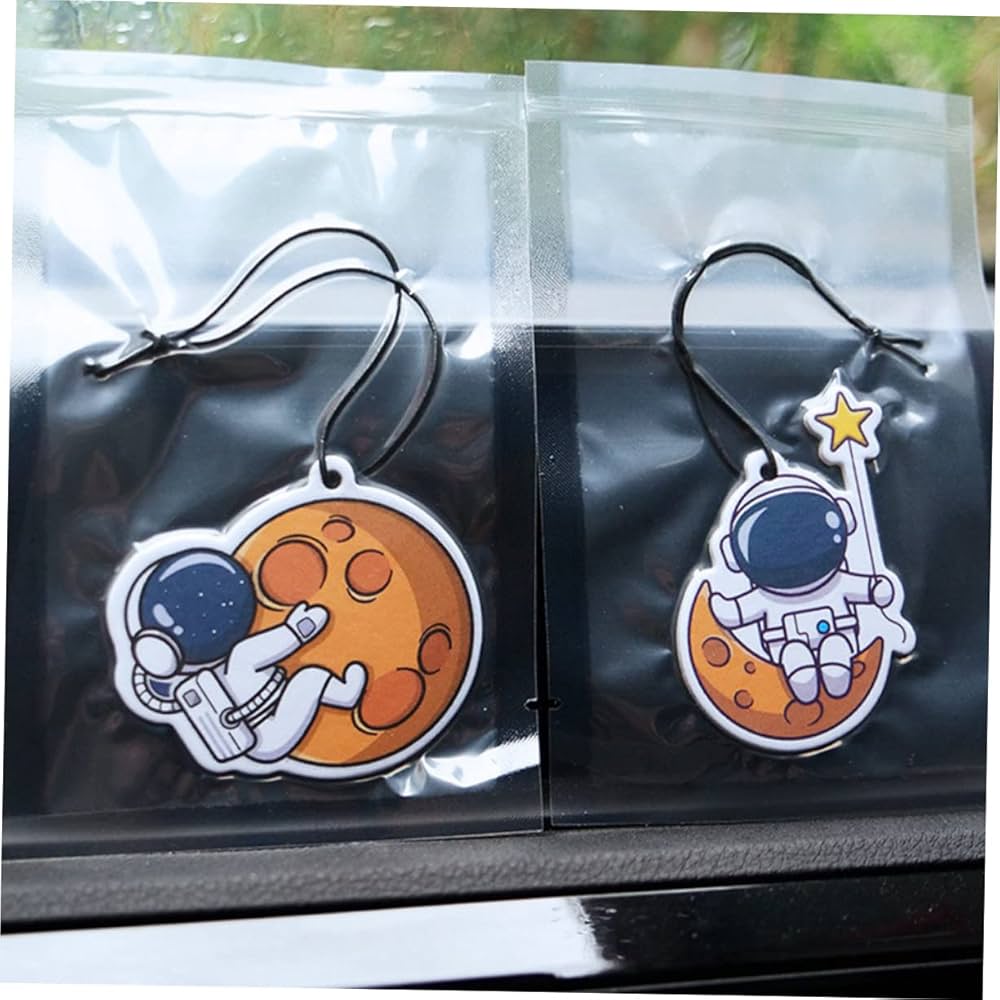
Unlike many promotional items that get stashed in a drawer, air fresheners tend to stay on display. That makes them a low effort, high frequency brand touchpoint that quietly does its job every day.
What makes custom air fresheners different from other branded giveaways?
Custom Air Fresheners stay visible for longer because they are designed to be left out. When someone hangs one from a rear view mirror or places it in a room, the branding becomes part of the space rather than a one-time interaction.
They also add a sensory layer. A pen writes, but a fragrance creates a mood. That emotional association can help a brand feel more memorable, even if the viewer only glances at the logo.
Why do air fresheners create so many “micro-impressions” each day?
They generate repeated exposure because people naturally revisit the same environments. A driver might enter their car twice a day, five days a week, and look through the windscreen area constantly. Even if they are not consciously reading the design, the brand is still being noticed.
Passengers count too. One air freshener can be seen by friends, family, colleagues, rideshare customers, and anyone else who steps inside. That is one item producing impressions far beyond the original recipient.
How does scent help a brand stick in someone’s mind?
Scent is closely tied to memory. When a fragrance becomes familiar, it can trigger recognition quickly, sometimes faster than visuals alone. A brand that pairs a consistent scent profile with their design can build a subtle identity people remember.
It also shapes perception. Fresh, clean scents can suggest reliability and care, while sweeter or bolder profiles can feel youthful or energetic. The key is choosing a fragrance that matches how they want the brand to feel.
Where do custom air fresheners get the most visibility?
Cars are the obvious winner because the product is often hung in a highly visible spot. But other locations can deliver strong results, especially where people spend time in close proximity.
Common high visibility placements include:
- Vehicle mirrors, dashboards, cup holders, and boot areas
- Wardrobes, gym bags, and lockers
- Home offices and shared workspaces
- Small retail counters, fitting rooms, and stock rooms
- Hospitality spaces like receptions, toilets, and staff areas
The best placement is simply the one that fits the audience’s routine.
Who benefits most from using custom air fresheners?
They work best for brands that rely on local awareness, repeat business, referrals, or community reputation. Any business that wants to stay top of mind between purchases can benefit.
Examples include gyms, garages, car washes, cafés, barbers, estate agents, tradespeople, event organisers, and subscription services. They also fit online brands that want a physical reminder in a customer’s daily life, especially after a first purchase.
How can a brand design an air freshener people actually keep?
People keep designs that feel intentional, not overly salesy. If it looks like an advert, it is easier to remove. If it looks like a cool object, it is more likely to stay.
Strong designs usually have:
- A clear logo, but not dominating the whole surface
- One message or tag line, not a paragraph
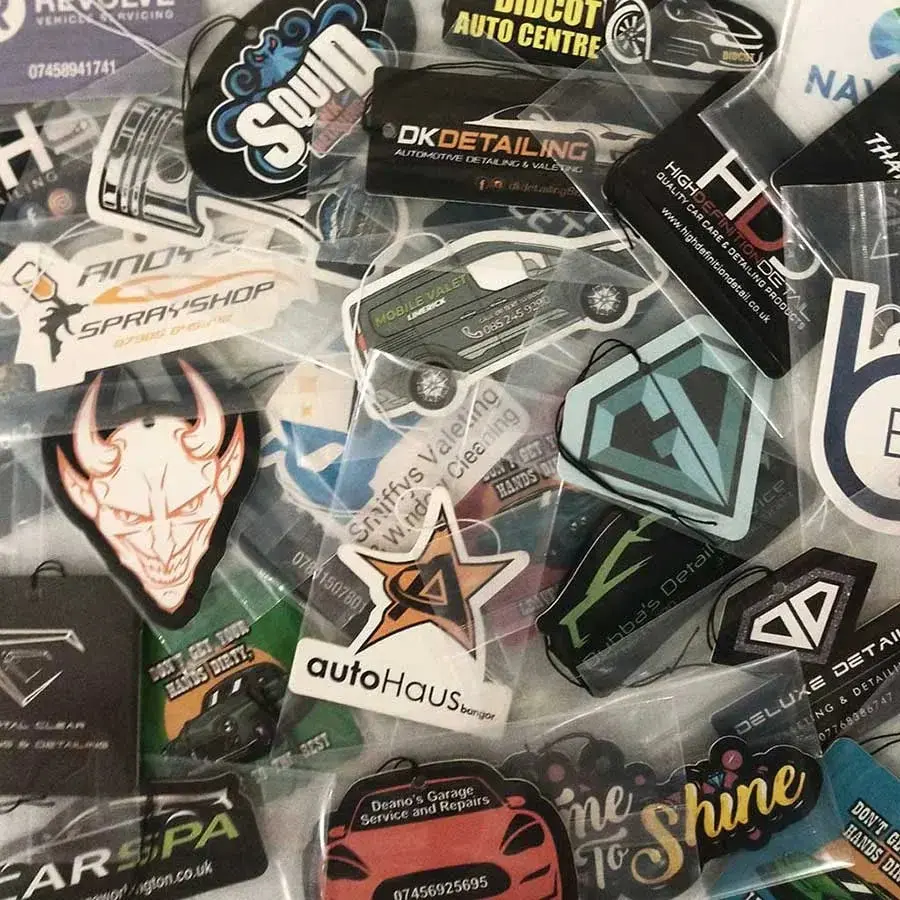
- A shape that matches the brand identity (car outline, mascot, product silhouette)
- Colours with good contrast for quick recognition
- A clean back side, or useful info like QR codes and socials
The goal is to make it feel like a nice item first, and marketing second.
What role does shape play in brand recognition?
Shape can act like a shortcut to recognition. If someone sees a distinctive silhouette repeatedly, they may identify the brand even before reading the text.
A custom shape also makes the item feel less generic. A standard rectangle can work, but a unique outline often gets better retention because it looks more personal and collectible. When a brand wants to stand out in a crowded local market, shape is an easy lever to pull.
How should brands choose a scent that matches their audience?
The right scent is the one people will tolerate for weeks. Overpowering fragrances can backfire, even if the design is perfect. Light, clean profiles tend to suit broad audiences.
Many brands do well with options like fresh linen, ocean breeze, citrus, new car, or subtle vanilla. If they know their customers, they can go more specific. A streetwear brand might choose something bolder, while a wellness studio might favour calm herbal notes.
Can custom air fresheners support campaigns and seasonal marketing?
Yes, because they are easy to tie to a moment. A limited edition freshener for a seasonal sale, a new menu launch, or an event can create a sense of urgency while still delivering long-term visibility.
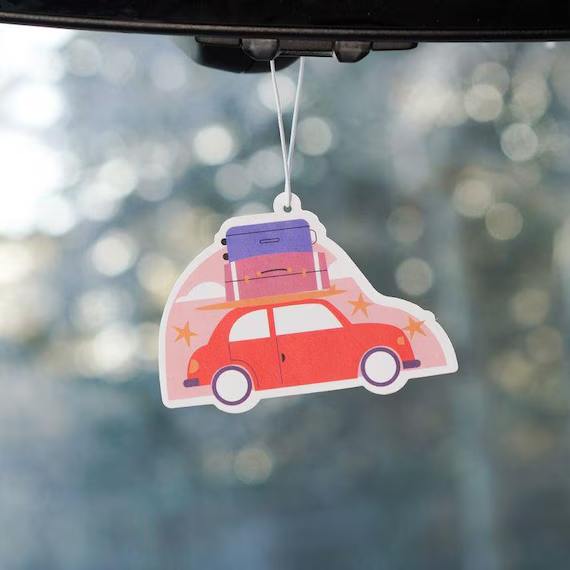
Seasonal versions also encourage collecting. When customers expect a new design each quarter, they are more likely to pick them up repeatedly. That turns a simple giveaway into a recurring brand habit. Click here to get about where to source custom lapel pins Adelaide businesses trust.
How can brands measure whether air fresheners are working?
They can track performance by linking the item to an action. A QR code, discount code, or unique landing page makes it measurable without adding much clutter.
Other simple indicators include customers mentioning the freshener, increased repeat visits after distribution, or improved recall when asked how someone heard about the business. Air fresheners are not always a direct response tool, but they can still be tested like one.
What are the most common mistakes brands make with custom air fresheners?
The biggest mistake is treating them like a flyer. Too much text, too many colours, and too many calls to action can make the design feel cheap and disposable.
Other common issues include choosing a scent that is too strong, printing low-resolution artwork, or ignoring where and how the item will be displayed. If a brand wants daily visibility, they need to design for real-life use, not just for a mock-up.
How should a brand get started with a simple, effective first run?
They should start small, pick one design, choose one broadly liked scent, and focus on distribution. The best results usually come from giving them to the right people at the right moment, such as after a service, at checkout, or inside a delivery.
A practical first run plan is: one standout shape, one clean design, one scent, and one trackable offer. That keeps it easy to execute while still giving clear feedback on what to improve next time.
FAQs (Frequently Asked Questions)
What makes custom air fresheners more effective than other branded giveaways?
Custom air fresheners remain visible for longer periods because they are designed to be displayed openly, such as hanging from a car’s rear view mirror or placed in rooms. This constant visibility integrates the branding into everyday spaces, creating ongoing exposure rather than a one-time interaction. Additionally, they add a sensory dimension through fragrance, enhancing emotional connection and brand memorability beyond just visual appeal.
How do custom air fresheners create multiple brand impressions daily?
Custom air fresheners generate repeated exposure because they reside in environments people frequently revisit, like cars or offices. For example, a driver entering their car daily will see the air freshener multiple times a day, even subconsciously noting the branding. Furthermore, passengers such as friends, family, colleagues, or rideshare customers also see the air freshener, multiplying the number of impressions from a single item.
Why is scent important in strengthening brand recognition with air fresheners?
Scent is closely linked to memory and can trigger quick recognition often faster than visuals alone. When a brand pairs a consistent fragrance with its design, it creates a subtle identity that customers remember. The choice of scent also influences perception; for instance, fresh and clean aromas suggest reliability and care, while sweeter or bolder scents convey youthfulness or energy. Selecting a fragrance aligned with the desired brand personality enhances emotional engagement.
Where are the most effective placements for custom air fresheners to maximise brand visibility?
Cars are the primary placement due to high visibility spots like rear view mirrors, dashboards, cup holders, and boot areas. Other effective locations include wardrobes, gym bags, lockers, home offices, shared workspaces, small retail counters and fitting rooms, as well as hospitality areas like receptions and staff rooms. The best placement aligns with where the target audience spends time regularly to ensure frequent exposure.
Which businesses benefit most from using custom air fresheners as part of their branding strategy?
Custom air fresheners are ideal for brands relying on local awareness, repeat business, referrals, or community reputation. Examples include gyms, garages, car washes, cafés, barbershops, estate agents, tradespeople, event organisers and subscription services. They are also beneficial for online brands seeking to create a physical reminder in customers’ daily lives following initial purchases.
How can brands design custom air fresheners that recipients are likely to keep and display?
Successful designs feel intentional rather than overtly promotional. To encourage retention: use a clear but not overpowering logo; include only one concise message or tagline; choose shapes reflecting brand identity (like product silhouettes or mascots); employ colours with strong contrast for quick recognition; and keep the reverse side clean or useful by adding QR codes or social media handles. The goal is to make the air freshener an attractive item first and marketing tool second.